A Reader’s Map for Following a Long Debate
A reader’s map for following a long debate separates the defined problem, proposed change, objections, and open questions so new claims are easier to assess.
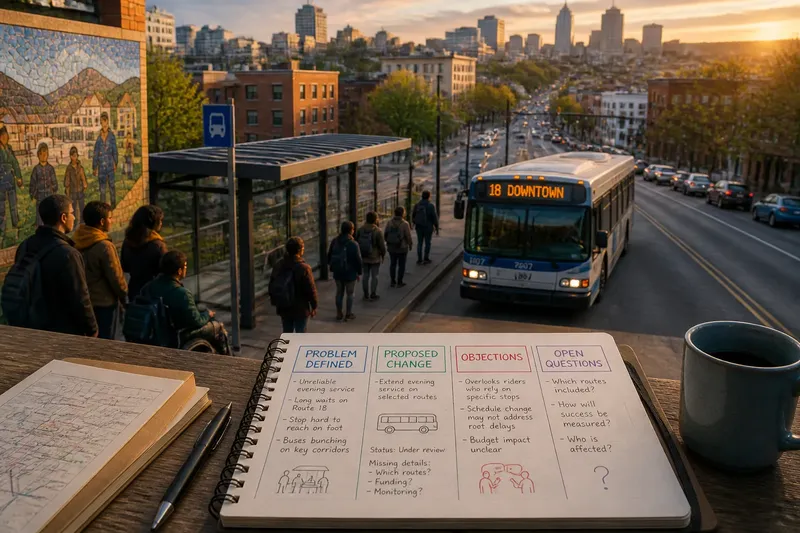
A reader’s map for following a long debate starts with the claims people make, not with a verdict about which side sounds most persuasive. In a dispute over public transit, one speaker may define the problem as unreliable service, while another points to routes that fail to reach certain neighborhoods. Those descriptions overlap, but they do not call for identical changes.
This method helps when a debate stretches across hearings, news coverage, public statements, and revised proposals. Keep a working record of four elements: the problem being defined, the change being proposed, the objections raised, and the questions nobody has answered. Update the record as the argument develops; its purpose is to show what has changed and what remains contested.
Start with a dated record of the debate
Choose a simple format before collecting material. A notebook, a plain text file, or a spreadsheet can all work. Give every entry a date, a source, and a short note about its kind: proposal, public comment, decision, news report, or analysis.
Keep direct statements separate from your interpretation. If a transit agency says it is considering a route redesign, record that as a proposal under consideration, not an adopted plan. A short quotation can preserve a key phrase, but include who said it and what was being discussed.
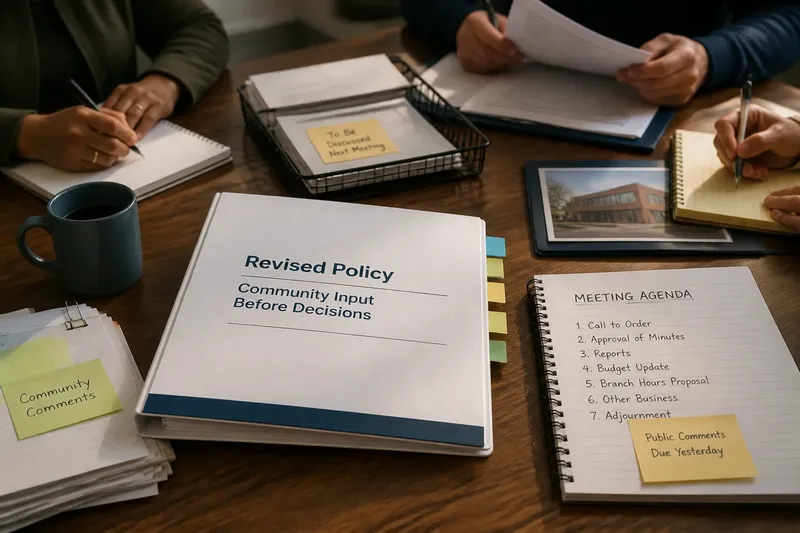
Choose sources that let you check the argument rather than merely hear it repeated. A meeting agenda may show what decision is scheduled; a draft policy may reveal the exact wording; a public comment may explain how a proposed change could affect someone’s routine. A news report can orient you, but look for the underlying document or recording when a claim is disputed and those materials are available.
Write down the date a claim was made, not only the date you encountered it. This helps distinguish a current position from an earlier one that may have been revised or withdrawn.
Define the problem in the speakers’ own terms
For each major participant, write one sentence describing the problem as that participant frames it. Name the group or institution, then state the condition it says needs attention. Avoid blending different accounts just because they concern the same subject.
In a transit debate, riders might describe long waits on a particular route, while planners focus on buses bunching along several routes. A neighborhood group could emphasize that a nearby stop is difficult to reach on foot. These related observations point toward different scales of action.
Ask what evidence or experience supports each description. Does the speaker refer to a written report, a public record, personal experience, or a forecast? Note the kind of support without treating its presence as proof. If the basis is unclear, mark it as unclear rather than filling in the gap yourself.
Also record whose experience is missing. A debate may describe service from the operator’s perspective without addressing riders who depend on a connection at a specific time. That absence does not settle the merits of a proposal, but it can reveal what the current definition leaves outside its frame.
Separate the proposed change from the hoped-for result
Write down what each participant wants someone to do. The proposal may involve changing a rule, shifting a budget, altering a service, creating a review process, or leaving current arrangements in place. Describe the action as concretely as the source allows.
Keep the action separate from the result its supporters expect. “Redesign the route map” is an action; “make service more dependable” is an intended result. People may agree about the desired result while disagreeing about whether a particular action is likely to produce it.
Mark the proposal’s status in plain language: suggested, under review, revised, adopted, delayed, or rejected. If the wording is incomplete, note what details are missing. A broad pledge may name an aim without specifying who would act, what rules would change, or how the decision would be carried out.
Imagine a city considering an extension of evening bus service. You record the initial proposal as an extension on selected routes, its stated aim as making late trips more accessible, and the missing details as route selection and funding. When a later draft names routes but says nothing about monitoring service, add that change; the record now shows a more specific proposal with an unanswered question about follow-up.
When a proposal changes, preserve both versions. A revised draft may respond to an objection, narrow the scope, or leave the core action untouched. Recording the difference helps show whether participants are negotiating over the same proposal or talking past one another.
Keep objections tied to the arguments they challenge
An objection is easier to assess when you identify what it challenges. It may question the problem definition, the proposed action, the expected result, the authority to act, or the way the change would be carried out. Record the target rather than reducing the objection to a label such as “opposed.”
For each objection, note who raises it and the reason given. One participant might argue that a proposal overlooks people who rely on a particular stop. Another might accept the aim but doubt that a schedule change addresses the underlying delay. These objections are not interchangeable: one concerns whose needs are represented, while the other concerns the fit between action and problem.
Then look for a response. It may answer the concern, revise the proposal, offer additional information, or reject the objection without addressing its reasoning. Record what happened, not what you think should have happened. If no response appears in the material you have, mark the objection as unanswered.
Strong disagreement can coexist with shared ground. Two participants may both want more reliable service but disagree about what causes delays or which routes should receive attention. Note any point of agreement precisely; do not use it to imply that the larger dispute is close to resolution.
Keep an open-questions list alongside the record
Make each unanswered question specific enough that a future document, decision, or reply could address it. “Will the change work?” is too broad. “Which routes would be included in the revised evening schedule?” points to a missing detail a reader can check.
- Scope: Check which people, places, or services the proposal covers. If the affected group is named, record it; if the scope is vague, note the gap and look for a draft that defines it.
- Authority: Check who can approve or carry out the proposal. If the responsible body is named, record its role; if not, seek the relevant rules or decision documents before treating the proposal as actionable.
- Resources: Check whether the plan identifies staff, funding, or other support. If it does, note what the proposal depends on; if it does not, mark implementation resources as unresolved.
- Evidence: Check what information supports the problem description or expected result. If a source is cited, record it and what it addresses; if none is given, label the basis as unstated rather than supplying one yourself.
- Accountability: Check who will explain what happened after a decision. If a reporting or review responsibility is named, record it; if not, keep follow-up on the open-questions list.
- Timing: Check whether the material states when a decision or implementation is expected. If it does, record the stated sequence; if it does not, mark timing as unspecified and avoid assuming the next procedural step.
Not every question matters equally at every point. Before a decision, scope and authority may be central; during implementation, responsibility and follow-up may matter more. Keep a question on the list when its urgency changes, and note when new information answers it only in part.
Do not treat every silence as evidence of evasion. A question may be outside the current proposal, not yet assigned to anyone, or absent from the sources you have read. State what you can see: the available material does not answer it.
Which questions keep a debate record useful?
How many sources should I follow?
Begin with a manageable set that includes material closest to the decision, such as the proposal, meeting documents, and statements from affected participants. Add sources when they offer a distinct perspective or make a claim you need to check; repeated announcements may add little.
What should I do when a claim is disputed?
Record the claim, the person or organization making it, and the objection in separate entries. Look for the underlying document or stated basis when available, then note what that material does and does not establish. If the dispute remains unresolved, leave it marked as contested.
How can I tell whether a proposal has changed?
Compare the wording of the new proposal with the earlier version, not just the accompanying summary. Note additions, removals, changes in responsibility, and changes in the people or places covered. A revision may address one objection while leaving others open.
When should I revise my own view?
Revisit your view when a new document changes the stated problem, clarifies how an action would work, or answers a question that mattered to your assessment. You can update your notes while leaving your judgment provisional. Record what changed your view, if anything, so the shift remains understandable later.
Review the map without turning it into a verdict
At regular intervals, read the four parts together. Ask whether the problem definition has shifted, whether the proposal has become more specific, which objections received a direct answer, and which open questions still affect the decision. This review can show whether the debate is clarifying its terms or simply producing more statements.
Be alert to changes in the scale of the argument. A discussion may begin with a specific service problem and expand into a dispute about who should set priorities. That shift may matter, but it is not the same question. Give it a separate note rather than rewriting the original issue to fit the newer argument.
Keep procedural developments distinct from substantive ones. A scheduled hearing, a delayed vote, or a newly assigned review may alter what happens next without changing the proposed policy itself. Mark both tracks so a reader can distinguish movement in the process from movement in the argument.
When the debate reaches a decision, add the decision and its stated rationale, then compare them with the questions you recorded. Some may have been answered, some deferred, and some left outside the decision. A concise map can make that distinction visible without pretending that a formal outcome settles every disagreement.
A reader’s map for following a long debate is most useful when it remains open to revision. Keep original claims, label what later material changes, and leave genuine uncertainty visible. The record offers a clear place to resume reading—and a better basis for noticing which unanswered question matters next.