From Shared Concern to a Name for Change
Naming a shared concern for change helps people recognize common ground, see what a proposed solution includes, and notice who may be left outside.
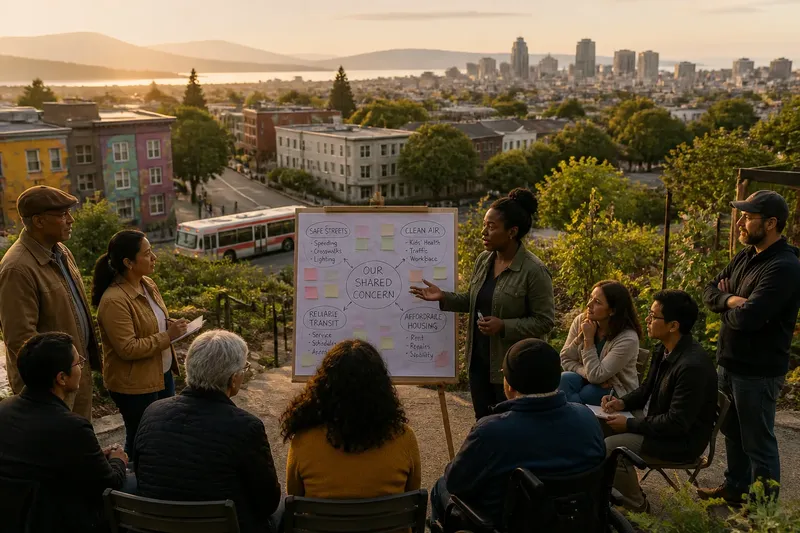
A name for change can turn scattered complaints into a shared concern, but it also draws a border around what people are being asked to notice. When a tenant says the apartment is cold, a neighbor mentions a broken window, and another worries about a heating bill, the phrase “healthy homes” gathers those experiences while making a claim about what connects them.
That act of naming is not just a communications choice. It shapes which experiences count as evidence, what remedies seem reasonable, and who can recognize themselves in the issue. These five considerations help explain how a useful name can open common ground without pretending that everyone means the same thing.
1. A shared name makes separate experiences legible
People often encounter a problem through its local effects. One person sees a long walk to a bus stop; another misses a shift because the bus did not arrive; a parent struggles to get a child to school. A broader phrase such as “reliable public transit” makes it possible to discuss those moments as connected, without claiming they are identical.
This translation matters because collective attention depends on recognition. Someone who thought a difficulty was private may hear the name and realize that others face a related obstacle. The phrase offers a place to begin speaking together, rather than requiring each person to first prove that their experience belongs in a public conversation.
A useful name keeps the connection visible while leaving room for variation. If it is too broad, it can make distinct problems blur together; if it is too narrow, people facing the same underlying condition may not see themselves in it.
Try asking whether someone can connect the shared phrase to an ordinary, observable experience.
2. The name points toward a cause, not just a symptom
Two names for the same condition can suggest different explanations. “Litter” directs attention to discarded objects and cleanup. “Waste management” can bring collection schedules, packaging, public bins, and disposal practices into view. Neither phrase settles the cause, but each makes certain questions easier to ask.
A name therefore carries an early theory of what is happening. “Food insecurity” frames missed meals as a condition of access and reliability, rather than simply a matter of individual choice. That framing can make the design of benefits, working schedules, transportation, and local food supply relevant to the discussion.
People should be able to inspect that implied theory. Ask what the phrase treats as the problem, what it treats as background, and what kind of response it makes seem plausible. If the answer is difficult to explain, the wording may be doing more to conceal disagreement than to create shared understanding.
3. The boundaries of a name determine who is recognized
Every collective name includes some experiences more readily than others. A campaign about “safe streets,” for example, may bring together people concerned about speeding, dangerous crossings, and public harassment. Yet residents who define safety through access for disabled people, freedom from aggressive policing, or safe night travel may find that the phrase is being used in a narrower way.
That does not mean a shared name must include every concern. It means its boundaries should be visible enough to discuss. People can ask whose experience the wording centers, who has difficulty using it, and whether the missing perspectives change what a proposed remedy would do.
Say a neighborhood group adopts “clean air” as its shared concern after residents notice smoke near a school. Imagine that one parent focuses on children with asthma, a nearby worker worries about breathing conditions on the job, and another resident points to traffic around the school. If the group names all three connections, more neighbors can recognize the issue; if it speaks only about the schoolyard, workers and people beyond the school boundary may not see their stake.
Invite people who encounter the problem differently to describe what the shared phrase leaves out.
4. A name can build agreement without erasing disagreement
Shared language is sometimes mistaken for shared judgment. People may agree that “affordable housing” names a serious concern while disagreeing about rent regulation, public housing, construction, or tenant protections. The phrase gives them a common subject; it does not decide the means.
Keeping that distinction clear makes discussion more honest. A group can state what members recognize in common, then name the choices that remain contested. Otherwise, a broad phrase may create the impression of consensus until a specific proposal makes the differences impossible to ignore.
It also helps to separate a name from a slogan. A slogan may be designed to persuade quickly, while a name for a shared concern should help people examine the issue. A concise phrase can do both, but clarity is more valuable than cleverness when people need to compare what they mean.
- State the concern in plain language before debating a solution.
- List the experiences that members believe belong under the name.
- Identify disagreements about causes or remedies without presenting them as settled.
- Notice whether the wording invites questions from people who are affected but not present.
5. What should people ask about a name for change?
How can a group tell if a name is too broad?
If members use the phrase to mean substantially different things, its breadth may be hiding practical disagreement. Ask each person to describe one condition the name includes and one response they think follows; compare the answers before treating the phrase as a shared platform.
Should a group change its name as the issue develops?
It may be useful to revisit the wording when new experiences or consequences become visible. A revision should explain what the earlier name obscured and what the new one includes, so people can understand the change rather than hear it as a rejection of the concern they first recognized.
How can people use a name without speaking for everyone?
Describe it as a shared working term, not a claim that every affected person uses the same words or wants the same remedy. Leave room for people to correct the description, and distinguish a group’s stated position from the broader range of views around it.
What makes a name useful outside a meeting?
A useful phrase helps someone connect a public argument to a concrete experience and understand what questions to ask next. If it needs a long explanation before a reader can tell what is at stake, pair it with a plain-language description of the conditions it refers to.
6. The best wording stays open to correction
A name for change is not a permanent container. As people compare experiences, they may discover that a phrase hides an overlooked group, combines unlike problems, or points toward a cause that does not fit what they see. Revising the wording can be a sign that the shared understanding is becoming more precise.
But revision should not become a contest over who controls a phrase. The useful question is whether the name helps people recognize a common concern and examine its limits. Explain what prompted a change, ask those affected whether the revised wording fits, and keep the unresolved parts in view.
When you choose a name for change, test it against a concrete account of the problem, a person whose experience might be excluded, and the remedy it seems to invite. That small check can make shared language more welcoming without asking it to settle every disagreement.