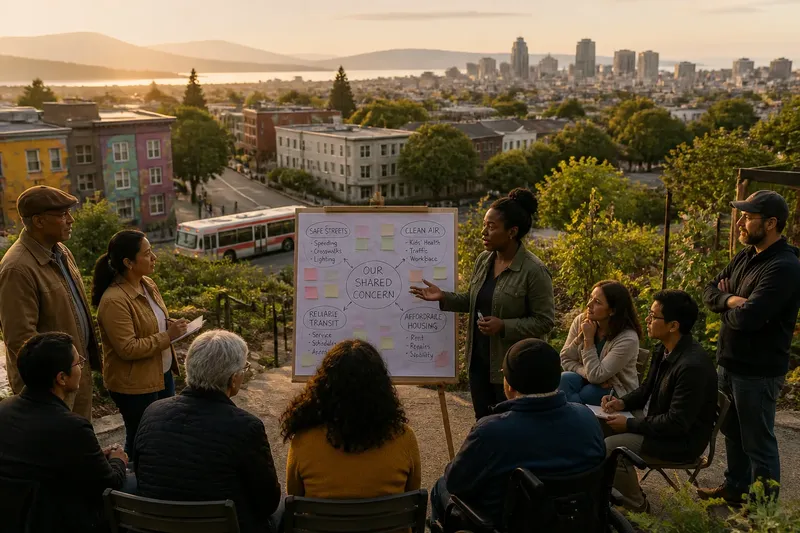
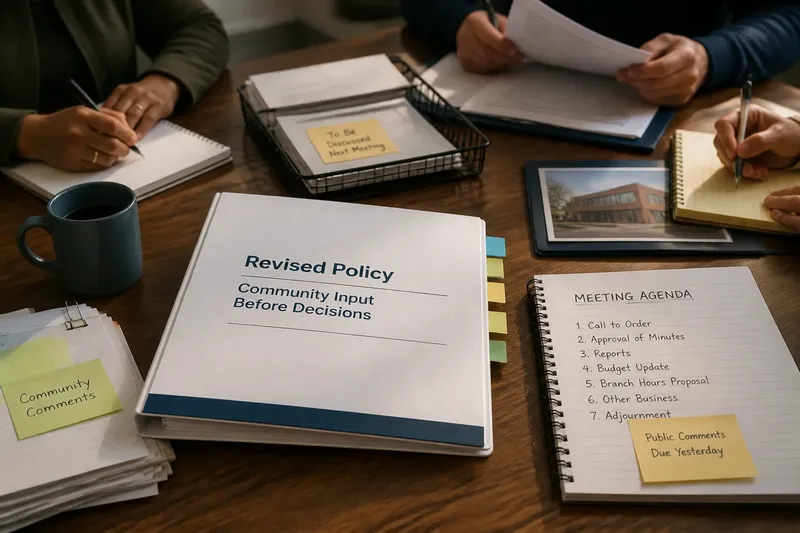
The Turning-Point Story and What It Leaves Out
The turning-point story makes social change easy to remember; trace the quieter conditions and accumulated choices behind the dramatic moment.
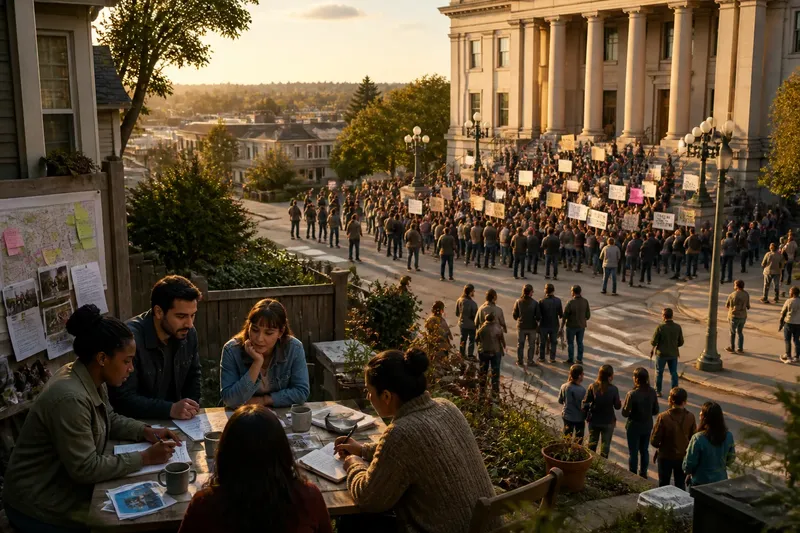
A turning-point story makes social change easy to remember, but it can hide the slow work that gave one moment its force. A march, a court ruling, a strike, or a public vote may become the scene everyone recalls, while the relationships, local decisions, and institutional pressures behind it recede from view.
This is not a reason to dismiss dramatic moments. It is a reason to read them as concentrated evidence rather than self-contained causes. The useful question is not only what happened that day, but what had already become possible—and what remained unresolved afterward.
A vivid scene can shrink a long process
Stories often gather a complicated sequence around one visible event. A photograph, a speech, or a sharply worded decision gives memory a clear center; the months of meetings, arguments, preparation, and changed expectations are harder to hold in a single image.
That compression can make the event look like a switch: before it, nothing; after it, change. In practice, public turning points often reveal tensions or capacities that have been building. The scene matters, but it does not explain itself.
When you encounter a neat before-and-after account, mark the moment it treats as the hinge, then ask what people were doing just before it.
Turning-point stories need a longer timeline
A useful account follows more than the headline date. Look for the sequence of small changes that altered what participants, officials, or bystanders believed they could do. These may include a new local alliance, a change in public language, repeated refusals to comply, or a policy dispute that exposed a weakness in existing practice.
Do not assume every earlier action was a direct step toward the later event. Some efforts may have failed, split a coalition, or produced lessons only after the fact. A longer timeline should preserve uncertainty, not rewrite the past as though everyone knew where events were headed.
Say you are reading an invented account of a neighborhood campaign that wins a public hearing after a crowded meeting draws attention. The account says the meeting changed officials’ minds. To inspect the claim, trace what residents had done beforehand: perhaps they had documented recurring problems, spoken with separate groups of neighbors, and asked for the same issue to appear on several agendas. The expected result of that reading is a fuller explanation of why the meeting drew a crowd and what officials had already been asked to address—not a claim that any single action caused the outcome.
Accumulated choices leave uneven traces
Movements and institutions rarely preserve every contribution equally. A prominent speaker may be easy to quote, while the person who kept a contact list, arranged childcare, translated a notice, or maintained a meeting room leaves few public records. Those ordinary tasks can shape who is able to participate and whether collective work can continue.
Records also reflect the priorities of the people and organizations that kept them. A newspaper archive may capture a confrontation but not the conversations that made cooperation possible. Minutes may record a formal vote while omitting the disagreements that narrowed the options before it.
Compare different kinds of traces where they are available: meeting notes, flyers, correspondence, local reporting, public notices, and later interviews. Treat gaps as limits on what can be claimed, rather than as proof that unrecorded work did not happen.
Memory assigns credit as well as meaning
The turning-point story often identifies a person or institution that appears to have moved events forward. That choice can honor courage and make responsibility visible. It can also concentrate credit in a way that makes collective labor seem incidental, or lets an institution present a response as voluntary while obscuring the pressure that preceded it.
When an account names a central figure, ask what their role depended on. Who shared information, sustained participation, challenged the strategy, or carried the consequences? This is not an exercise in distributing praise evenly. It is a way to understand how influence worked and where power remained.
Notice, too, which participants vanish from the version repeated later. If the story remembers decision-makers but not those most affected, its emphasis may tell you as much about the needs of later audiences as about the original campaign.
What should a turning-point account include?
What makes a moment a turning point?
A moment earns that description when it changes what people can do, what institutions must respond to, or how a conflict is publicly understood. Its importance is clearer when the account identifies the change that followed, rather than relying on the drama of the scene alone.
How can I tell whether a story overstates one event?
Look for a sharp before-and-after division that leaves little room for earlier organizing or later implementation. Then check whether the account names the conditions that brought people together and the decisions that turned attention into a response.
Why do later accounts favor dramatic scenes?
A concentrated event is easier to remember, teach, and represent than an extended sequence of uncertain choices. That convenience can make a story travel, even when it leaves out work that was less visible or less easily attributed.
How should I handle missing records?
Separate what the surviving material directly establishes from what remains plausible but unconfirmed. You can describe the limits of the record and seek another kind of source without filling gaps with a tidy explanation.
Separate the event from the change that followed
A dramatic announcement is not the same as a durable shift. The announcement may alter a rule, public position, or immediate decision; the effects depend on what people and institutions do afterward. A turning-point account becomes more precise when it distinguishes the visible event from its implementation and its later interpretation.
For institutional change, ask whether a new rule altered everyday decisions or stayed on paper. For collective action, ask whether a burst of attention led to continued coordination, new commitments, or a different balance of participation. These questions keep the story connected to observable consequences without treating any one outcome as inevitable.
Where the outcome is contested, retain the disagreement. One group may remember a moment as a breakthrough, while another sees an incomplete response or a new form of exclusion. Memory can hold those readings together without pretending they are identical.
Use a more careful form of shorthand
Short summaries are sometimes necessary. They can still avoid assigning a whole process to one scene by naming the moment alongside the conditions that made it consequential: an organized constituency, a prior dispute, a decision-maker under pressure, or a practice that had become difficult to defend.
When you retell the episode, give the event a clear place in the sequence rather than making it the entire sequence. The turning-point story remains memorable, but readers can see the accumulated choices that brought people to it and the work that followed.
The most useful account of a turning point does not make the moment smaller; it makes the surrounding process visible. Keep the vivid scene, then restore the quieter record beside it.